Join our fixed departure treks.  4.9 of 528 reviews
  4.8 of 214 reviews
4.9 of 528 reviews 4.8 of 214 reviews 
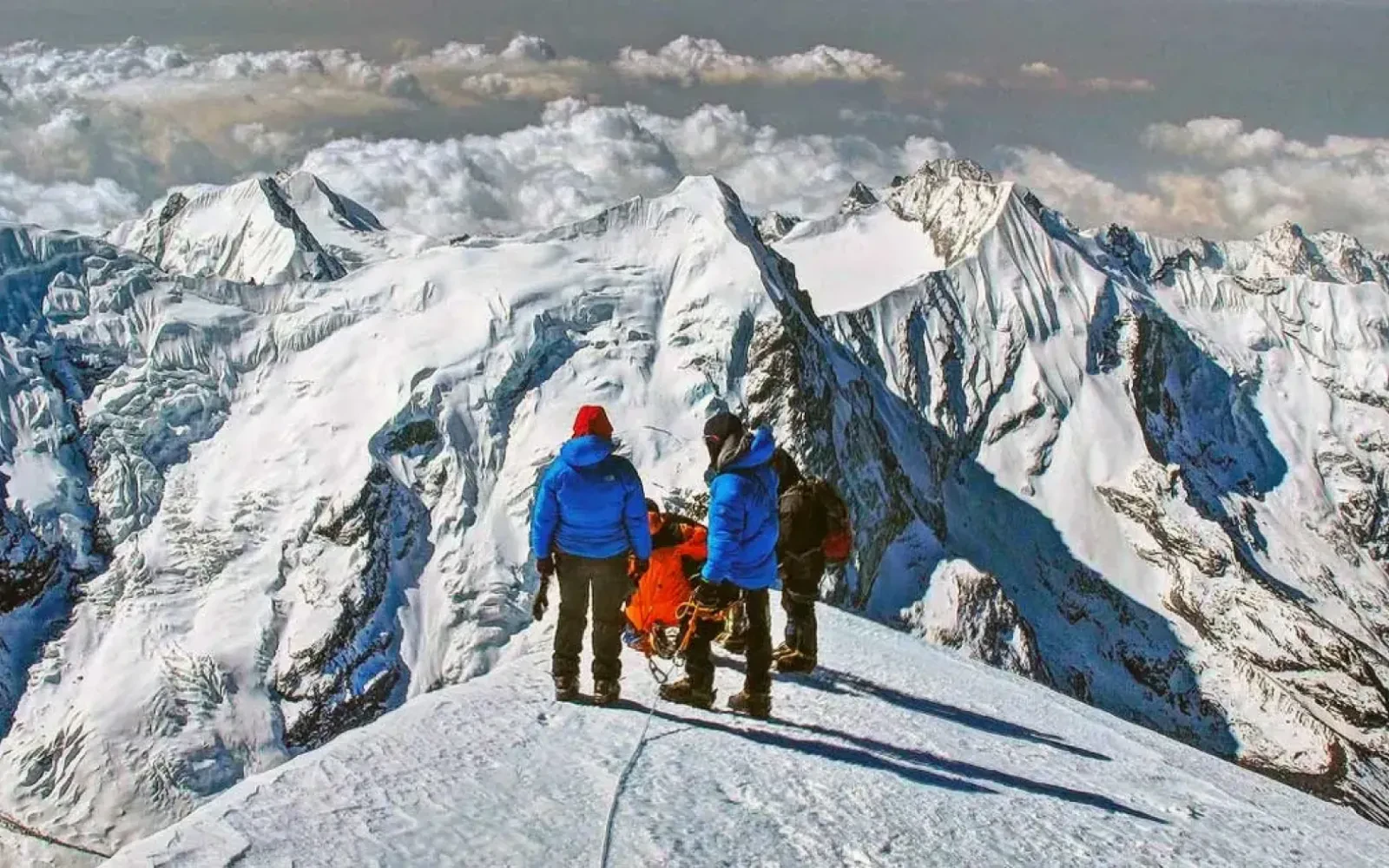
If you’re dreaming of climbing a Himalayan peak but don’t have years of mountaineering experience under your belt, Mera Peak is your gateway to high-altitude glory. Rising to an elevation of 6,476 meters (21,247 ft), Mera Peak offers one of the most accessible ways to summit a Himalayan giant—without needing technical climbing credentials.
From the untouched Hinku Valley to surreal sunrise views of Mount Everest, Makalu, Lhotse, and Cho Oyu, this trek promises a life-changing journey through remote landscapes, Sherpa villages, and glaciated summits.
Mera Peak’s legacy began in the 1950s when members of the British expedition explored the area following early Everest attempts. Officially climbed first by French climbers Marcel Jolly and G. Baus in 1975, it has since become a favored choice for beginner mountaineers and seasoned trekkers alike.
Today, it’s recognized by the Nepal Mountaineering Association as a trekking peak — meaning it doesn’t require intensive technical climbing, making it ideal for adventure seekers looking to step up from trekking to mountaineering.
Here’s why the Mera Peak expedition should be your top pick for a Himalayan climb:
Mera Peak Trek Itinerary (Standard 17-Day Plan)
Day 1: Arrival in Kathmandu, briefing and gear check
Day 2: Flight to Lukla (2,860m), acclimatization trek
Day 3: Trek to Chutanga (3,050m), lush forest walk
Day 4: Cross Zatra La Pass (4,600m), reach Tuli Kharka
Day 5: Trek to Kothe (3,600m), enter Hinku Valley
Day 6: Kothe to Thangnak (4,350m), yak pasture views
Day 7: Acclimatization day at Thangnak
Day 8: Trek to Khare (5,045m), glacier views begin
Day 9: Training day at Khare – rope skills, crampons
Day 10: Trek to Mera High Camp (5,780m)
Day 11: Summit Day – Climb Mera Peak (6,476m), descend to Khare
Day 12–14: Return via same route to Lukla
Day 15: Fly to Kathmandu
Day 16: Leisure day / buffer day for weather
Day 17: Departure
Note: Alternative helicopter drops to Khare available for short itineraries.
Spring (March–May)
Autumn (September–November)
Avoid:
Classic Route via Zatra La Pass
Khare Helicopter Drop Option
Amphu Laptsa Pass to Island Peak Combo
To climb Mera Peak legally, you need:
Pro Tip: Let your trekking agency handle permits. It saves time and ensures compliance.
You don’t need to be a pro climber, but Mera Peak isn’t a walk in the park. Prepare with:
Gear Type Essentials
Clothing Base layers, down jacket, waterproof pants
Footwear Double mountaineering boots (for crampons)
Climbing Crampons, ice axe, harness, helmet
Accessories Glacier glasses, headlamp, sunblock
Sleep -20°C sleeping bag
Extras First aid kit, energy snacks, hydration tabs
Rental gear available in Kathmandu.
Pro Tip: Get insurance that includes high-altitude rescue by helicopter
Epic 360-degree Himalayan views at summit:
Descent to Khare is done the same day.
Expense Type Approx. Cost (USD)
Permit Fees $250–400
Guide & Porter $25–35/day
Food & Teahouses $20–30/day
Climbing Gear (rental) $100–200
Kathmandu–Lukla Flight $300 round-trip
Total Package (agency) $2000–$2500
Local agencies like Nepal Alpine Treks or Highlander Treks offer customizable packages.
If you’re craving more than just a trek—but not quite ready for Everest—Mera Peak is your perfect middle ground. It’s adventurous yet accessible, remote yet rewarding. With the right preparation and support, summiting a Himalayan peak is absolutely within reach.
From glacier training to sweeping views of the tallest mountains on Earth, Mera Peak delivers a climbing experience that blends physical challenge, cultural richness, and pure mountain magic.
1. How hard is it to climb Mera Peak?
It’s considered moderately hard. You need endurance, but no technical climbing.
2. Do I need a climbing guide for Mera Peak?
Yes. Nepal law requires licensed guides for peaks above 6,000m.
3. Can beginners climb Mera Peak?
Yes, with good fitness and basic gear training.
4. Can I rent equipment in Kathmandu?
Absolutely. All climbing gear is available for rent near Thamel.
5. Is altitude sickness common on Mera Peak?
Yes, if not properly acclimatized. That’s why rest days are included.
6. Do I need travel insurance for Mera Peak?
Yes. Insurance covering helicopter evacuation is mandatory.
7. How long does it take to complete the Mera Peak trek?
Standard itineraries are 15–18 days.
8. Can I see Mount Everest from Mera Peak?
Yes! The summit offers clear views of Everest, Makalu, and more.
Our travel experts are ready to assist you with any questions.
Send us a message.Have a question before you book? Send your enquiry below and our travel experts will get back with the required information.