Need help with booking? Send us a message.
Island Peak Climbing, also known as Imja Tse (6,189m), is one of the most iconic and rewarding trekking peak adventures in Nepal’s Everest region. Operated professionally by Nepal Planet Treks & Expedition, this climb combines the legendary Everest Base Camp trek with an exciting introduction to Himalayan mountaineering. The journey begins with cultural immersion in Sherpa villages, scenic alpine trails, and gradual altitude gain that allows proper acclimatisation before the summit push. Standing between the towering giants of Lhotse, Ama Dablam, and Nuptse, Island Peak offers climbers a true sense of achievement without requiring advanced technical expertise.
The ascent involves glacier travel, ladder crossings over crevasses, and a thrilling, steep snow and ice headwall near the summit. With expert Sherpa guides, fixed ropes, and safety-focused logistics, climbers can confidently experience their first 6,000-meter Himalayan peak. Reaching the summit rewards you with breathtaking panoramic views of Mount Everest, Lhotse, Makalu, Baruntse, and the Khumbu Glacier—a moment that defines a lifetime of adventure.
Nepal Planet Treks & Expedition ensures a well-paced itinerary, quality equipment support, and personalised service throughout the expedition, making Island Peak an ideal choice for both first-time climbers and experienced trekkers seeking a stepping stone toward higher peaks.
Choosing the right season is crucial for a successful Island Peak Climbing experience. The best seasons are Spring (March–May) and Autumn (September–November), when weather conditions are stable, skies are clear, and temperatures are suitable for high-altitude climbing. Nepal Planet Treks & Expedition schedules most expeditions during these periods to ensure safety, comfort, and summit success.
Spring is particularly popular due to warmer temperatures at higher elevations and blooming rhododendron forests along the trekking routes. Snow conditions on the summit headwall are generally stable, making climbing more manageable. This season also coincides with major Everest expeditions, creating a lively mountaineering atmosphere in the Khumbu region.
Autumn, on the other hand, offers crystal-clear mountain views following the monsoon rains. Trails are dry, weather is predictable, and visibility is at its best. Although slightly colder than spring, autumn provides excellent climbing conditions with fewer chances of snowfall interruptions.
Winter climbs are possible but extremely cold, while the monsoon season is generally avoided due to poor visibility and higher risks.
Best Seasons at a Glance
Island Peak Climbing is classified as a moderately difficult trekking peak, suitable for physically fit individuals with basic mountaineering knowledge. While it does not require advanced climbing techniques, climbers must be comfortable using crampons, ice axes, harnesses, and fixed ropes. The most challenging section is the final summit ridge, which includes a steep ice headwall requiring rope ascent under the guidance of experienced Sherpa climbers from Nepal Planet Treks & Expedition.
Altitude is the biggest challenge rather than technical difficulty. Proper acclimatization days in Namche Bazaar and Dingboche, along with a gradual ascent, significantly reduce the risk of altitude sickness. Mental resilience, endurance, and a positive attitude are just as important as physical strength for summit success.
Transportation plays a vital role in the expedition. The journey begins with a scenic flight from Kathmandu to Lukla, one of the world’s most adventurous airstrips. From Lukla, the trek proceeds on foot through the Everest region. Nepal Planet Treks & Expedition manages all domestic flights, porter services, and logistics to ensure a smooth experience.
Difficulty & Transport Overview
During the Island Peak Climbing expedition, Nepal Planet Treks & Expedition ensures comfortable accommodation and nutritious meals throughout the trek and climb. Along the trekking route, climbers stay in well-maintained tea houses and lodges, offering warm rooms, shared dining areas, and basic amenities. These lodges provide a cozy environment to rest and recover after long trekking days.
At Island Peak Base Camp and High Camp, accommodation shifts to fully supported camping. High-quality tents, sleeping mats, and insulated dining tents are provided to protect climbers from harsh alpine conditions. Hot drinks and freshly prepared meals help maintain energy levels during the most demanding part of the expedition.
Food is carefully planned to support high-altitude performance. Meals include a mix of Nepali, Tibetan, and Western dishes, focusing on carbohydrates, proteins, and hydration. Special dietary requirements can be accommodated with advance notice.
Food & Accommodation Highlights
Climbing Island Peak requires several official permits, all of which are arranged by Nepal Planet Treks & Expedition to ensure a hassle-free experience. The most important is the Island Peak Climbing Permit, issued by the Nepal Mountaineering Association (NMA). This permit confirms legal access to the peak and supports mountain conservation.
In addition, climbers must obtain a Sagarmatha National Park Entry Permit and a Khumbu Pasang Lhamu Rural Municipality Permit. These permits contribute to trail maintenance, environmental protection, and local community development in the Everest region.
By handling all paperwork, Nepal Planet Treks & Expedition allows climbers to focus entirely on preparation and enjoyment. Transparent costs and timely permit processing ensure compliance with Nepalese regulations.
Required Permits
Choosing Nepal Planet Treks & Expedition for Island Peak Climbing means choosing safety, expertise, and personalised service. With experienced, government-licensed guides and highly trained Sherpa climbers, the company prioritises client well-being and summit success. Small group sizes allow for individual attention and flexible pacing, which is essential at high altitude.
Nepal Planet Treks & Expedition is deeply committed to responsible tourism, environmental sustainability, and local community support. From fair porter treatment to eco-friendly practices, every expedition is conducted with respect for nature and culture. Their well-designed itineraries ensure proper acclimatisation, reducing risks and increasing success rates.
Whether you are attempting your first Himalayan peak or expanding your mountaineering experience, Island Peak Climbing with Nepal Planet Treks & Expedition promises professionalism, unforgettable scenery, and a life-changing adventure.
Why Travel With Us
Here’s what to pack for a successful Island Peak climb:
Climbing Island Peak is a dream for many adventurers, offering a perfect blend of technical challenge, stunning views, and a cultural experience in Nepal’s Everest region. Whether you’re looking to step up from trekking to your first peak or just looking for a Himalayan adventure that’s just right, Island Peak will leave you with memories for a lifetime.
1. Do I need previous climbing experience?
While basic mountaineering skills (like using ice axes and crampons) are helpful, you don’t need prior climbing experience. For first-timers, we recommend taking a short climbing course before the trek.
2. How high is Island Peak?
Island Peak stands at 6,189 meters (20,305 feet), making it one of the highest trekking peaks in Nepal.
3. What is the success rate of summiting Island Peak?
With proper acclimatisation, good physical preparation, and solid weather conditions, the success rate is high. However, altitude sickness or weather conditions can sometimes impact climbs.
4. Do I need a guide and porter?
It’s highly recommended to trek with a licensed guide. While the trail is well-marked, the added knowledge of a guide can improve safety, particularly on the summit day. Porters are also available for carrying personal gear.
5. Is Island Peak safe to climb?
Yes, it’s safe to climb, especially with a professional guide and good preparation. Your team will also be equipped with first aid kits, oxygen tanks, and weather forecasts to ensure safety during the climb.
6. How much does Island Peak climbing cost?
The total cost generally ranges between USD $2,000–$3,000, including permits, guide, porters, accommodation, and food. Prices vary based on package inclusions.
Upon your arrival at Tribhuvan International Airport in Kathmandu, a representative from Nepal Planet Treks & Expedition will warmly welcome you and assist with your transfer to the hotel in a private vehicle. After checking in, you will have time to refresh, relax, and recover from your journey. In the evening, enjoy a gentle walk around the lively Thamel area, which is Kathmandu’s main tourist hub filled with shops, cafés, and cultural charm. Later, we host a welcome dinner where you will meet your guide and receive a detailed briefing about the Island Peak climbing adventure, safety procedures, and expectations. Overnight stay in Kathmandu.
Early in the morning, we transfer to the domestic airport for a scenic mountain flight to Lukla, one of the most exciting airstrips in the world. The flight offers breathtaking views of Himalayan peaks and deep valleys. Upon landing, your guide will organize luggage and porters while you explore the bustling Lukla village. After lunch, the trek begins with an easy downhill walk following the Dudh Koshi River. Passing prayer wheels, mani stones, and small Sherpa settlements, you will reach Phakding. The rest of the afternoon is spent relaxing or strolling around the village, allowing your body to begin acclimatizing. Overnight in Phakding.
After breakfast, the trek continues along the Dudh Koshi River, crossing several suspension bridges decorated with prayer flags. We pass through villages such as Monjo before entering Sagarmatha National Park, where permits are checked. The trail then descends briefly to Jorsalle, the last village before Namche Bazaar. From here, a challenging uphill climb leads to Namche, with your first possible glimpse of Mount Everest on a clear day. Namche Bazaar is the vibrant heart of the Khumbu region, featuring shops, bakeries, banks, and lodges. You’ll settle into your lodge and enjoy the lively mountain atmosphere. Overnight in Namche Bazaar.
This important acclimatization day helps your body adjust to the altitude while remaining active. After breakfast, you may hike to the Everest View Hotel for stunning panoramic views of Everest, Lhotse, Ama Dablam, and Thamserku. Alternatively, explore Namche Bazaar’s bustling market, especially lively on Saturdays when locals gather to trade goods. You can also visit the Sherpa Museum to learn about Sherpa culture, traditions, and legendary mountaineers. The remainder of the day is spent relaxing, enjoying fresh bakery items, or observing daily life in the mountains. Overnight stay in Namche Bazaar.
Leaving Namche after breakfast, the trail follows a scenic contour path offering magnificent views of Everest, Nuptse, Lhotse, Ama Dablam, and other Himalayan giants. After descending to the river at Phungithanka, the trail climbs steadily through dense rhododendron and pine forests. This ascent can be physically demanding but rewarding. Upon reaching Tengboche, you are greeted by the famous Tengboche Monastery, the largest and most spiritual monastery in the Khumbu region. Set against the dramatic backdrop of Ama Dablam, this area is one of the most beautiful places in the Himalayas. Overnight in Tengboche.
The day begins with a gentle descent through forests of birch, fir, and juniper to Deboche, followed by a gradual ascent toward Pangboche village. Here, you can see one of the oldest monasteries in the region and enjoy excellent mountain views. Beyond Pangboche, vegetation becomes sparse as the landscape turns alpine and rugged. The trail climbs steadily along the Imja Valley, offering dramatic views of Island Peak and surrounding glaciers. Eventually, you reach Dingboche, a beautiful high-altitude village surrounded by stone walls protecting crops from cold winds. Overnight stay in Dingboche.
Today is dedicated to acclimatization to prepare for higher altitudes. You may choose to rest and enjoy the spectacular mountain scenery, or take an optional hike to Nagarjun Hill (5,050m). This hike offers breathtaking views of Lhotse, Makalu, Ama Dablam, Island Peak, and the Imja Valley. The slow ascent and descent help your body adapt naturally. After returning to Dingboche, the afternoon is spent relaxing, hydrating, and preparing for the next stages of the trek. Overnight stay in Dingboche.
The trail heads northward across alpine meadows and gradually ascends toward Thukla. From here, you’ll climb a steep ridge marked by memorials dedicated to climbers who lost their lives on Everest expeditions—a moving and reflective experience. The trail then levels out, offering views of Pumori, Lingtren, and Khumbutse. The terrain becomes rocky and glacial as you approach Lobuche. Despite the altitude, the dramatic scenery keeps the trek inspiring. Upon arrival, you’ll rest and prepare for the following day’s journey toward Everest Base Camp. Overnight in Lobuche.
After breakfast, we trek along the edge of the Khumbu Glacier to Gorakshep, the last settlement before Everest Base Camp. After lunch and a short rest, the adventure continues toward the legendary Everest Base Camp. The trail winds through rocky moraines and glacial terrain, with awe-inspiring views of the Khumbu Icefall. During peak season, you’ll see expedition tents and climbers preparing for Everest summits. After exploring the base camp and taking photos, we return to Gorakshep for the night. Overnight in Gorakshep.
Before dawn, we begin the hike to Kala Patthar, the best viewpoint for close-up views of Mount Everest. As the sun rises, the peaks glow in golden light, creating one of the most unforgettable moments of the journey. After spending time at the summit, we descend to Gorakshep for breakfast and then trek back down to Dingboche. The descent is long but rewarding, with changing landscapes and improved oxygen levels. Overnight stay in Dingboche.
Leaving Dingboche, the trail climbs gradually before turning east toward the Imja Valley. Walking alongside glacial streams and moraines, the scenery becomes increasingly dramatic. The route passes the junction leading to Amphu Lapcha Pass and continues toward Island Peak. Crossing rugged terrain, we arrive at Island Peak Base Camp, surrounded by towering peaks and glaciers. Tents are set up by our experienced crew, and you’ll receive a briefing on climbing techniques and safety. Overnight at tented camp.
After breakfast, we ascend toward High Camp, carrying essential climbing gear. The trail becomes steeper and narrower, passing rocky ridges and exposed sections. As we gain altitude, views of Lhotse, Nuptse, and Ama Dablam become even more spectacular. Upon reaching High Camp, we rest, hydrate, and prepare for summit day. Your guide will conduct a final briefing, checking equipment and reviewing climbing procedures. Overnight at High Camp in tents.
We begin the summit push early in the morning under headlamp light. The ascent involves rocky sections, glacier travel, and fixed ropes on steep snow and ice slopes. Roped together, we carefully cross crevasses before tackling the final summit ridge. Reaching the summit is a moment of triumph, offering breathtaking panoramic views of Everest, Lhotse, Makalu, and surrounding peaks. After celebrating and taking photos, we descend carefully to Chhukung or Dingboche for a well-earned rest. Overnight in a teahouse.
Descending from the high alpine environment, we retrace our steps through Pangboche and Tengboche or Phungithanka. The trail passes through forests and suspension bridges, with familiar mountain views appearing once again. As oxygen levels increase, walking becomes more comfortable. Upon reaching Namche Bazaar, you can enjoy hot showers, bakeries, and relaxed time celebrating the successful climb. Overnight stay in Namche Bazaar.
This is the final trekking day as we follow the Dudh Koshi River back to Lukla. Passing through Sherpa villages and green landscapes, you’ll have time to reflect on the incredible journey. Upon arrival in Lukla, your guide will confirm flight details. In the evening, enjoy a celebratory farewell dinner with your trekking and climbing crew, sharing stories and memories. Overnight in Lukla.
After an early breakfast, we take a scenic flight back to Kathmandu. Upon arrival, Nepal Planet Treks & Expedition will transfer you to your hotel. The remainder of the day is free to relax, enjoy a massage, or explore the city at your own pace. Overnight in Kathmandu.
This day serves as a buffer in case of flight delays from Lukla. If not needed, you can enjoy sightseeing, shopping in Thamel, or book optional tours such as Kathmandu Valley sightseeing. In the evening, we host a farewell dinner to celebrate the successful completion of your Island Peak adventure. Overnight in Kathmandu.
Depending on your flight schedule, you will have time for last-minute shopping or relaxation. Our representative will transfer you to Tribhuvan International Airport for your onward journey. We bid you farewell and thank you for choosing Nepal Planet Treks & Expedition for your Himalayan adventure.
Your Start Date is the day you land in Nepal, and your End Date is when you fly home.
If the set Island Peak Climbing group dates don’t suit your schedule, we can offer alternative dates upon request.
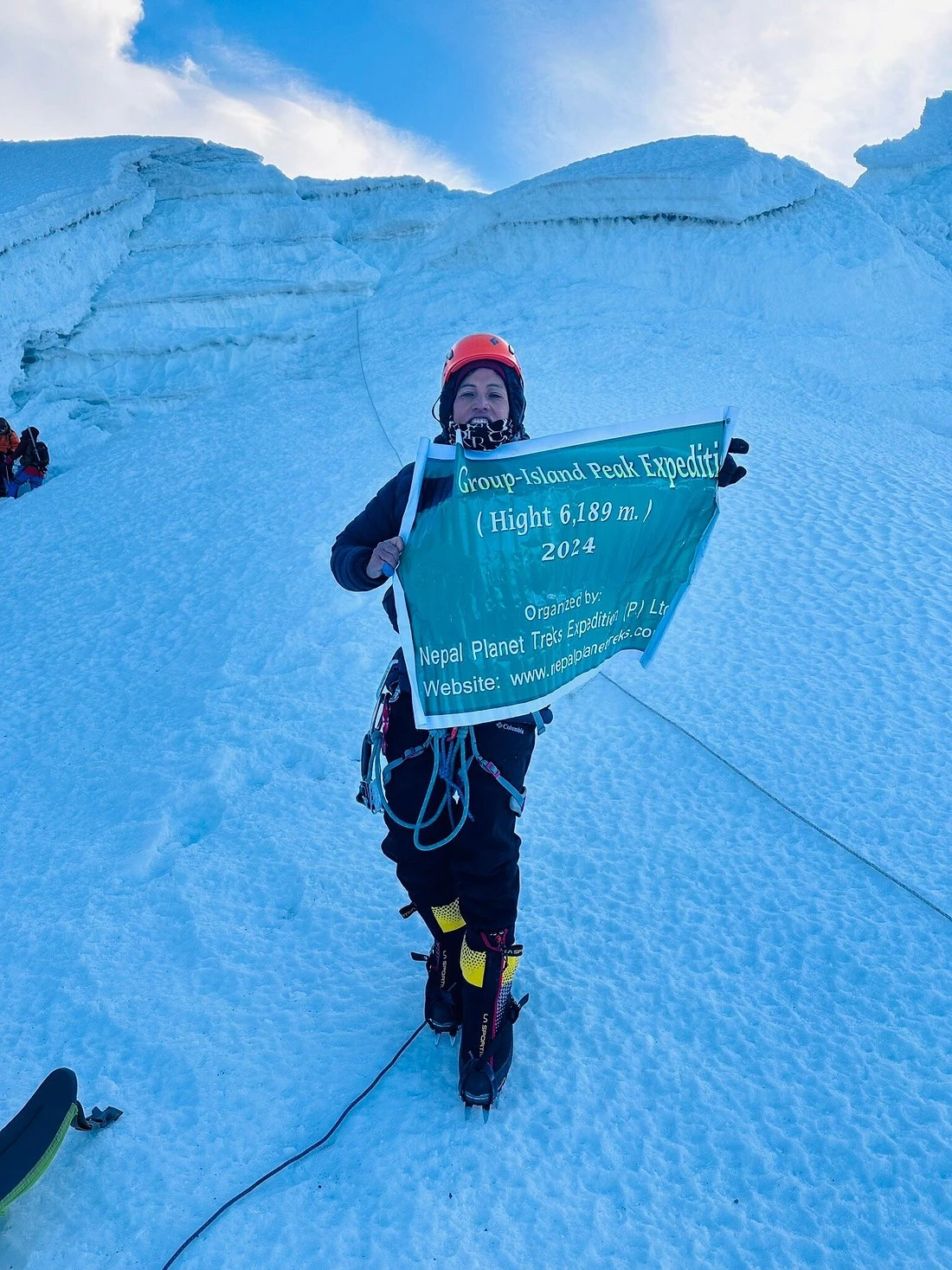
Namste from Sydney. I am kamala i did mountain climbing on march 2024. I did Island peak climbing which is 6189 m hight. I would like to say thank you so much Nepal Planet Treek i🙏🏼🙏🏼👍👍🇳🇵🇳🇵❤️❤️ Without you guys I did not success . Thank you for your great service @NJ Adhikari and @ Sanjib Adhakari. I really appreciated your service . I am highly recommend for this company all you guys. If you like to go Trekking in Nepal . See you soon again .👍🇳🇵❤️ From Kamala dhital from Sydney 👍❤️
We went to Nepal for our honeymoon and it has been a wonderful experience. We hired the Everest Base Camp Trekking and the ascension to the Island Peak with Sanjib and his crew of Nepal Planet Treks. The communication and information was easy and clear for the first moment. Good quality-price comparing with other companies I asked. Sanjib was waiting for us at Katmandu airport and he helped us renting the material we needed. The hotel in Katmandu is really nice, with excellent breakfast. Once we started the trekking with our guide Nir (Sanjib's brother) and our porter Bep, I have to say that we became a great team, the experience was wonderful, we were lucky with the weather and they were all the time nice, kind and attentive with us. Great job of Nir, we didn't have bad days or altitude sickness (we had a good acclimatization) and we were able to achieve the EVB with few people and a great view. He also hire another great guide, Passang, who helped us reaching our first 6000m peak, the Island Peak, it was an amazing experience. Bep our porter, was a 20 years old boy, he did a really good job carring our bags during the hole trek, always nice and with an smile, we really think their job is really hard and it is worth valuing. At the end Sanjib took us again from Katmandu's hotel to the airport, and our adventure was completed. We are so grateful to them and we truly recommend them :)
Sanjib from Nepal Planet Treks organized for me a tailored individual tour including three peaks above 6000m altitude (Mera Peak, Island Peak, Lobuche East) combined with classics like EBC, Kala Patthar, Three Passes, Namche Bazar. I travelled almost one month with their guide and porter. Organization was very professional and reliable, even more important the company was very flexible with changes that needed to be implemented due to weather and snow conditions. I can recommend their services without any caveats and am very thankful for their excellent service.
Island Peak Climbing is one of the most popular trekking peak adventures in Nepal, combining high-altitude trekking with a non-technical Himalayan climb. Island Peak, also known as Imja Tse, stands at 6,189 meters and is located in the heart of the Everest region within Sagarmatha National Park. The peak offers spectacular views of Mount Everest, Lhotse, Makalu, and Ama Dablam. With Nepal Planet Treks & Expedition, this climb is carefully designed to include proper acclimatization, safety, and professional guidance, making it an excellent introduction to Himalayan mountaineering for adventurous trekkers.
Island Peak is classified as a trekking peak, but it still requires a good level of physical fitness and mental endurance. The climb involves long trekking days, glacier travel, use of fixed ropes, and a final steep snow and ice slope. While prior technical climbing experience is not mandatory, basic mountaineering skills and comfort with heights are beneficial. Nepal Planet Treks & Expedition provides experienced climbing guides, pre-climb briefings, and safety support to help climbers complete the ascent successfully. With proper preparation and a positive attitude, many first-time climbers achieve the summit.
Previous climbing experience is not strictly required, but prior trekking at high altitude and good physical conditioning are highly recommended. The summit day involves the use of crampons, ice axes, ropes, and harnesses. Our professional climbing guides from Nepal Planet Treks & Expedition provide on-site training and instruction at base camp and high camp, ensuring that participants understand basic techniques and safety procedures before attempting the summit. With proper guidance and determination, motivated beginners can successfully climb Island Peak.
Physical preparation is key to enjoying and successfully completing Island Peak Climbing. We recommend cardiovascular training such as hiking, running, cycling, or stair climbing several weeks before the trip. Strength training for legs and core, along with endurance hikes carrying a backpack, is highly beneficial. Mental preparation is equally important, as the climb involves long days and challenging conditions. Nepal Planet Treks & Expedition also provides pre-trip guidance to help you prepare effectively.
Reaching the summit of Island Peak is a goal, but safety always comes first. If a climber cannot continue due to altitude sickness, weather conditions, or personal health, our guides will make a careful decision to descend. This is a normal part of high-altitude mountaineering and does not reflect failure. Nepal Planet Treks & Expedition prioritizes your well-being and ensures that alternative arrangements are made for a safe return. Many climbers still consider the journey a rewarding achievement, even without reaching the summit.
The best seasons for Island Peak Climbing are spring (March to May) and autumn (September to November). During these periods, weather conditions are more stable, visibility is excellent, and temperatures are manageable. Spring offers warmer days and the chance to see Everest Base Camp bustling with expeditions, while autumn provides crystal-clear mountain views and less snowfall. Nepal Planet Treks & Expedition schedules departures during these optimal seasons to maximize safety, comfort, and summit success rates.
Safety is the top priority of Nepal Planet Treks & Expedition. We employ government-licensed, experienced climbing guides who are trained in high-altitude safety and first aid. Our itineraries include proper acclimatization days, gradual altitude gain, and flexible schedules. We carry group medical kits, use fixed ropes on steep sections, and closely monitor weather conditions. In case of emergencies, we coordinate rescue operations efficiently. Our focus on preparation, equipment, and experienced support significantly reduces risks during Island Peak Climbing.
Accommodation during Island Peak Climbing varies depending on the location. In Kathmandu, we arrange comfortable 3-star hotels in Thamel on a Bed & Breakfast basis. During the trek, you will stay in well-maintained teahouses with basic but cozy facilities. At Island Peak Base Camp and High Camp, accommodation is provided in fully equipped tents with mattresses. Nepal Planet Treks & Expedition ensures that all accommodations are clean, safe, and suitable for high-altitude conditions to provide proper rest throughout the journey.
Nepal Planet Treks & Expedition provides full board meals during the trekking and climbing period, including breakfast, lunch, and dinner. Meals are freshly prepared and designed to provide enough energy for trekking at high altitude. The menu includes local Nepali dishes, international options, soups, and seasonal fresh fruits. At camping sites, meals are prepared by our trained kitchen staff using hygienic equipment. Special dietary requirements can be accommodated with prior notice, ensuring climbers remain well-nourished and energized.
Island Peak Climbing requires several official permits, including Sagarmatha National Park entry permits, a TIMS (Trekkers’ Information Management System) card, and a climbing permit issued by the Nepal Mountaineering Association. Nepal Planet Treks & Expedition handles all necessary paperwork and permit arrangements on your behalf, allowing you to focus entirely on the adventure. All permit costs are included in the package unless stated otherwise, ensuring a hassle-free experience from start to finish.


 (18)
(18)  100% recommend (0)
 (0)
(0)